


Tarandrus – Unveil the Mystery, Savour the Warmth.
It began with a whisper, a subtle yet irresistible call from the shadows of tradition and craft, beckoning during the long, cold embrace of winter. From this quiet yearning arose a desire — a desire to craft a beer that would defy the chill, warming the spirit with rich Belgian complexity and lavish spices. Thus, from deep contemplation and meticulous intent, emerged Tarandrus 9. Named for the mythical creature Tarandrus, often depicted as a cryptic reindeer capable of changing colours to elude capture, the beer embodies a sense of elusive mystique and transformative warmth, perfect for the darkest months.
Tarandrus 9, the inaugural brew of “The Eldritch Brews Collection,” draws inspiration from the enigmatic worlds of H.P. Lovecraft, evoking mystery and depth akin to forbidden knowledge glimpsed only in dreams. Crafted taking inspiration from the honoured tradition of Belgian Quadrupels, but without any desire to answer to any specific beer style, this brew is deeply layered with robust malt flavours and a tapestry of spices, each sip resonating with warmth and arcane subtlety.
In this chronicle, dear reader, you are invited into the dimly lit recesses of the brewery where the intricate dance of grains, yeast, and secret spices culminated in this extraordinary 9% ABV quadrupel. Pour carefully, savour deliberately, and immerse yourself in the lore behind Tarandrus 9.
Chapter 1: Malt Selection
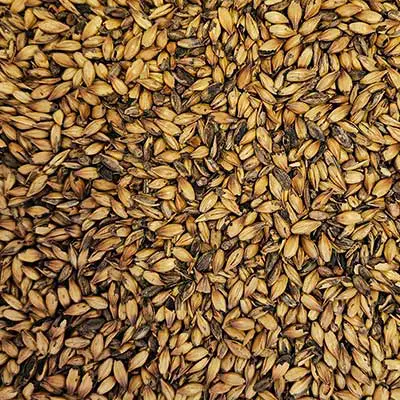
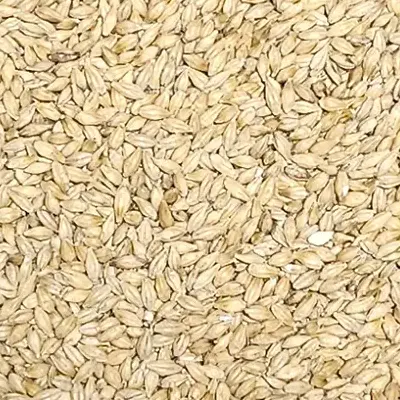
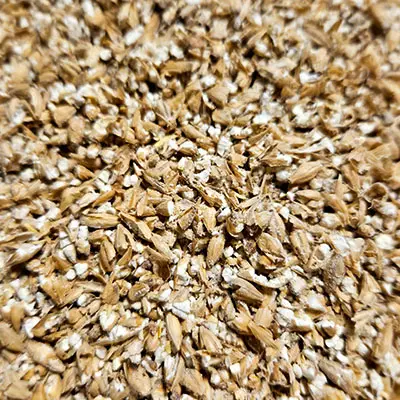
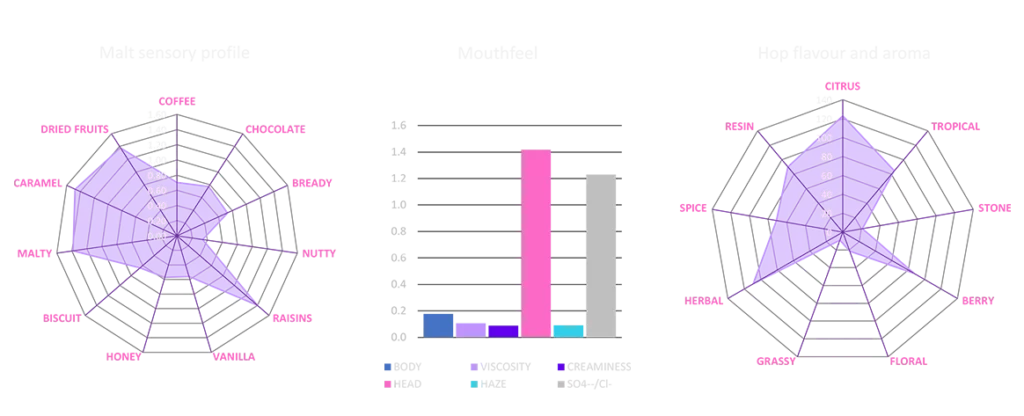
The malt selection for Tarandrus 9 was chosen to ensure complexity, depth, and balance. At its foundation, 33% Pilsner malt (NO-OX Belgomalt in our case, any good quality Pilsner should do the job here) provides a crisp and refined base, while 16.5% Mr. Roost Wheat malt from Dingemans contributes a creamy, yet spicy and silky mouthfeel. Enhancing this rich texture and flavour are 8% Caramunich III malt from Weyermann, offering caramel sweetness and nuanced depth, alongside 5% Carapils (Weyermann) for added body and stability. The addition of 5% Melanoidin malt (Weyermann) sustain the body even more (I like those quads full bodied and with residual sweetness) and brings pronounced toasted biscuit notes, complemented by 5% Special-B malt (Dingemans), imparting intense dark fruit and raisin characteristics. The malt profile is rounded out by 10% medium Candi syrup, 5% Diastatic malt, and 12.5% Pale Ale malt (Dingemans) to further enriching the beer’s overall complexity.
Chapter 2: Yeast Selection
Fermentis SafAle T-58
The yeast chosen to animate Tarandrus 9 was no less deliberate. For the first version of this brew, we turned to the renowned T-58 dry yeast strain from Fermentis — a classic Belgian-style yeast prized for its ability to generate complex esters and spicy phenolics. Its subtle notes of pepper, clove, and dried fruit complement the layered malt base, adding an aromatic dimension that conjures the arcane. This yeast, robust and reliable, thrives at higher fermentation temperatures (we went up to 25°C), encouraging expressive fermentation character while maintaining balance. It lends the beer not only its soul, but a whisper of mystery, something alive within the glass.
WLP540 Abbey IV
This version employed WLP540 Abbey IV Ale Yeast, chosen in pursuit of an even more intricate and refined fermentation profile. White Labs describes this strain as producing balanced fruit aroma and flavour characters, and recommends it for abbey-style beers such as dubbels, tripels, and Belgian strong ales. It is therefore particularly well suited to a beer like Tarandrus 9, where the yeast must do more than merely ferment: it must shape the beer’s atmosphere.
Where T-58 brought a more overtly spicy and phenolic expression, WLP540 was selected to draw the beer towards a deeper, more layered complexity, with a profile that feels rounder, more vinous, and more seamlessly woven into the malt. Its character suggests dark orchard fruits, soft esters, and that unmistakable abbey-like breadth which can make a strong Belgian ale feel at once luxurious and alive. With an attenuation range listed by White Labs at 74–82%, medium flocculation, and a recommended fermentation range of 19–22°C, it offers both expressive potential and technical control.
WLP540 was also particularly well suited to the use of Brambling Cross, whose dark berry and hedgerow character found a natural echo in the yeast’s layered abbey-style fruitiness. Together, they helped push the beer towards a deeper, more shadowed aromatic profile, where yeast and hop seemed to reinforce one another rather than compete.
Chapter 3: Hop Selection and spices
The hop additions for Tarandrus 9 were structured with restraint and purpose, forming an aromatic framework that complements rather than contends with the beer’s malt and spice complexities. The first act began with a first wort hopping of Simcoe, a technique chosen for its ability to impart a smoother, more rounded bitterness. This early addition lends a faint resinous undertone that anchors the brew’s sweetness without intruding upon it. As the boil approached its final stages, further additions were made at both 15 and 5 minutes, blending Simcoe with Bramling Cross. Together, these hops contribute a subtle layering of dark berry character, hedgerow spice, and gentle resinous depth — expressive enough to be felt, yet never so forceful as to displace the deeper, darker centre of the beer.
The cumulative bitterness, reaching 35 IBU, was carefully judged to provide balance and structure: an invisible architecture within which the richer flavours might unfold. Then, with only five minutes of boiling remaining, the final arcana was revealed. A carefully measured blend of cumin seed, coriander seed, and grains of paradise was cast into the wort, adding another register of complexity to the brew. The cumin brings a warm, earthy pungency, the coriander a faint citrus lift, and the grains of paradise a whisper of peppery heat and botanical depth. These additions do not dominate, but rather haunt the palate, subtle and lingering, like the echo of a forgotten rite. It is in this final gesture that Tarandrus 9 most fully embraces its eldritch nature.
For a more traditional approach, Saaz could have been used in place of Simcoe. Its finer herbal and spicy profile would have produced a more classically Belgian expression, with a softer and more familiar bitterness. The choice of Simcoe, by contrast, introduces a subtle resinous depth that feels less conventional, but more in keeping with the darker character of Tarandrus 9.
Chapter 4: Water Profile
Behind every great brew lies the often overlooked alchemy of water. For Tarandrus 9, the water profile was softened and shaped with care, echoing the mineral balance found in the storied Trappist brewhouses of Wallonia. Much like the water used in crafting Rochefort 10, it possesses a gentle character — low in harsh minerals yet rich in harmony. The sulphate-to-chloride ratio was fine-tuned to 1.1, a delicate equilibrium that allows malt warmth to shine while preserving a crisp structural finish. This subtle interplay lends the beer a refined mouthfeel and a quiet clarity, as if the very essence of the brew were filtered through ancient limestone caverns whispered about in myth.
Chapter 5: Process Parameters
Mashing Schedule
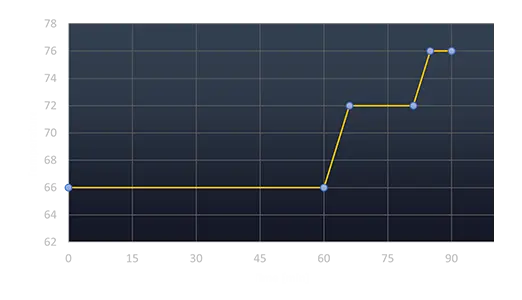
The brewing of Tarandrus 9 followed a carefully orchestrated mash schedule, each step chosen to coax forth body, depth, and warmth. The mash began with a 60-minute rest at 66°C, allowing for efficient starch conversion while preserving fermentable sugars. This was followed by a 15-minute step at 72°C — a deliberate ascent into higher temperatures, favouring the production of dextrins and unfermentable sugars. This choice was no accident: by encouraging a fuller body and lingering sweetness, we sought to counterbalance the dryness that might otherwise result from a yeast strain as expressive as T-58 or WLP540. A final mash-out at 76°C for five minutes prepared the wort for sparging, stabilising enzymatic activity and ensuring a smooth runoff. The higher mash temperatures serve not only the palate but the mood of the beer — plush, opulent, and cloaked in the comforting weight of winter darkness.
Sparging and Boiling
Sparging was done with water heated to 76°C, effectively rinsing the grains and gathering the remaining sugars. The collected wort was then subjected to a 90-minute boil, which served to sterilise, concentrate flavors, and bring out the desired hop character. Salts from the water profile (potassium chloride and magnesium sulfate) were added after sparging to stabilise the ionic balance.
Hop Additions
Achieving a calculated IBU of 35, hops were added for desired bitterness, aroma, and flavor as describe in Chapter 3. Additions took place at FHW, 15 minutes and 5 minutes left in the boil.
Fermentation and Maturation
Fermentation — the stage where wort becomes myth — was conducted with deliberate control to shape the expressive character of Tarandrus 9. After boiling and rapid cooling, the wort was brought to 18°C, at which point the yeast was introduced. The primary fermentation was allowed to proceed at this steady temperature for the first three days, ensuring a clean start with restrained ester development and subsequently allowed to free-rise, naturally attaining the temperature of 25°C on the fifth day, encouraging the yeast to fully express its aromatic complexity — gentle phenolics, subtle pepper, whispers of dried fruit — while ensuring complete attenuation. On day twelve, the beer was transferred to a secondary fermenter and chilled to 10°C, allowing sediment to settle and flavours to integrate more fully. Wood was added by day twenty and by day forty, the beer underwent a cold crash, held near freezing for five days to promote clarity and polish. Bottling followed, using a priming calculation aimed at achieving a carbonation level of 2.7 volumes of CO₂ — lively enough to lift the beer’s richness, yet restrained to preserve its contemplative weight. This effervescence sharpens the perception of spice, brightens dark fruit notes, and lends a luxurious texture to the final pour.
Once sealed in the bottle, Tarandrus 9 begins the slow alchemy of time. A six-month ageing in a 10°C cellar is not merely advised but somehow mandatory — it is a rite. In that quiet dark, flavours knit and deepen, esters mellow, and the beer ascends from its slumber, ready to be awakened in full splendour.
Chapter 6: Expected Profile
Conclusion
To brew is to perform a kind of alchemy — not the transmutation of lead into gold, but of water, grain, and time into something that stirs both the palate and the soul. In Tarandrus 9, each element was summoned with intention: the malt bill a symphony of sugars and Maillard whispers; the hops, a fleeting echo of forest and bramble; the yeast, a living instrument translating starch into spirit; and the water, soft as winter rain, shaped to carry it all. Fermentation proceeded not by chance, but by thermodynamic design —a controlled dance of temperature curves and metabolic thresholds, guiding Saccharomyces through each biochemical rite.
Yet beyond its gravity readings and ion ratios, Tarandrus 9 remains a creature of deeper resonance. Like its namesake, it eludes simple definition, changing hue with the light, revealing secrets only to those who wait. It is a beer brewed for long shadows, for pages turned beneath dim lamps, for rituals observed more than understood. It is both science and spell. And as you raise the glass, you do not merely drink; you participate in the unveiling of something old, warm, and just a little uncanny.
Cheers!
Reader notes