


An Eldritch Tribute to Duvel Citra.
Brewing The Queen in Yellow starts with tradition. This beer would be meticulously lagered for two weeks before a significative dry-hopping session that brings citrusy, almost ethereal notes to the surface. With maturation at a cool 10°C, the flavours will coalesce, yielding a balanced yet mysteriously layered brew, inviting its drinker to taste not only the beer but also the shadows of an eldritch world that brushes so close, one almost feels the pull of Carcosa itself.

The recipe includes the familiar bright, citrus-driven hops of a Duvel Citra, paired with a body that’s slightly fuller — just enough to let it linger, like an echo of the Yellow Sign’s call. Hints of lemon zest dance alongside the subtle malt sweetness, and a balanced bitterness rounds out the experience. As the players sip, perhaps they’ll feel the weight of destiny, the urgency of the approaching doom, and maybe, just maybe, the gaze of the King in Yellow from the edges of their glass.
Here’s to those who face the unknown, who confront cosmic dread, and who do it with a frothy pint at hand.
Chapter 1: Malt Selection
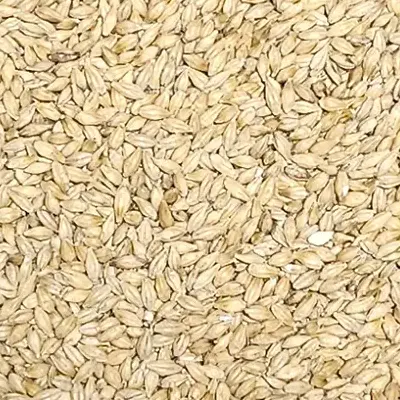
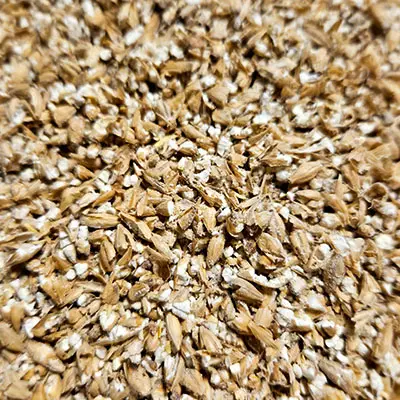
For The Queen in Yellow, a Belgian Tripel with a twist, the foundation lies in a thoughtfully chosen malt and grist selection that balances classic richness with a lighter body, allowing hop character to emerge without sacrificing the robust spirit of the style. While the original version of the Queen in Yellow used Maris Otter as the base grain, I moved to Barke Pilsner for this revised iteration. The grist has been stripped back to three fermentables: Pilsner Barke (77.5%), flaked rice (15%), and light candi syrup (7.5%). That simplification is deliberate. The earlier recipe leaned on a slightly rounder, fuller malt structure, but the more this beer moved towards a Duvel Citra-inspired expression, the more it became clear that the base needed to be paler, drier, and more restrained. Rather than building layers of malt richness, this version is designed to create space: space for expressive fermentation, for bright hop aroma, and for that dangerously elegant drinkability that defines the beer.
Pilsner Barke – the new foundation
At the heart of the recipe now sits Pilsner Barke, chosen for its clean continental profile and refined malt character. It provides all the fermentable backbone the beer needs, but without the nuttier, more rounded emphasis that Maris Otter brought to the earlier draft. That shift matters. In a beer where attenuation, carbonation, yeast character, and hop brightness are all meant to work in concert, the base malt should support rather than compete. Pilsner Barke offers a gentle grainy sweetness and a polished, golden base upon which the rest of the beer can unfold.
Flaked Rice – lightness by design
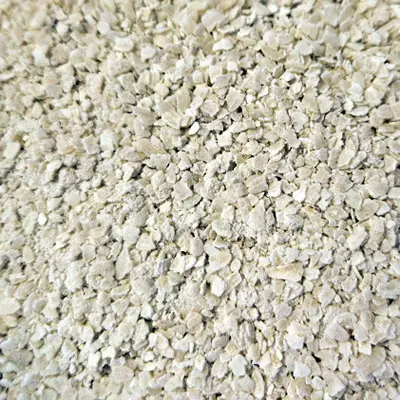
The increase to 15% flaked rice is not there to cheapen the beer, but to sharpen its shape. Rice helps to soften the malt footprint, lighten the body, and keep the palate crisp and nimble. In practical terms, it pulls the beer away from anything too bready or weighty, leaving a cleaner stage for the citrusy hop profile and the yeast-derived character to speak more clearly. For a strong Belgian ale meant to remain luminous rather than heavy, that is precisely the kind of restraint the grist should provide.
Candi Syrup (Light)
The final 7.5% of light candi syrup keeps the recipe firmly anchored in Belgian brewing logic. Its role is simple but essential: to raise gravity while helping the beer finish dry and highly attenuated. In this revised grist, the syrup has been dialled back slightly because it no longer needs to do as much of the structural work. With Pilsner malt replacing Maris Otter and rice taking on a larger share of the lightening effect, a more restrained sugar addition is enough to preserve the beer’s lift and elegance without pushing it too far into thinness.
Chapter 2: Yeast Selection
When crafting The Queen in Yellow, choosing the right yeast strain was crucial to achieve the hallmark profile inspired by Duvel — a delicate balance of fruity and phenolic notes, restrained sweetness, and a crisp finish that allows hop character to shine. After researching the yeast strains known for producing the classic Duvel profile, we found that Fermentis SafAle WB-06 presented a compelling option for this purpose.
Fermentis SafAle WB-06
Although traditionally classified as a wheat beer yeast, SafAle WB-06 offers qualities that align well with the Tripel style. Known for its subtle fruity esters and mild phenolic notes, WB-06 creates a distinct yeast character without overshadowing other elements in the beer. This yeast should bring a soft background of clove and banana-like esters — both of which harmonise with the malt complexity and accentuate the faint hints of Candi Syrup. The yeast’s restrained phenolics add a slightly spicy, peppery note that resonates well within the broader flavor profile, subtly enhancing the mystery and allure that Hastur’s lore suggests.
Find more information about this yeast here.
High Attenuation and Clean Finish
Another advantage of WB-06 is its high attenuation, which is essential for achieving the dry finish typical of the Tripel style. A high attenuation means that most of the sugars are fermented, creating a cleaner profile that lets the hop presence emerge and contributes to the crispness associated with Duvel-inspired brews. This makes it an ideal choice for balancing the beer’s maltiness with a leaner body, all while enhancing drinkability.
The yeast character is fruity and phenolic but mild enough to let the hops’ citrus brightness shine. This harmony ensures that the yeast contributes complexity without overwhelming, crafting a beer that celebrates both Belgian traditions and the unique interpretations fitting for a brew dedicated to The Queen in Yellow.
Chapter 3: Hop Selection
The hop schedule for this new version of The Queen in Yellow was also simplified and sharpened. Rather than relying on a broader or more layered structure across the boil, I chose to make the early additions deliberately modest and place the real emphasis on the late kettle, hop stand, and dry hop. The result is a beer whose bitterness remains firm enough to support the style, but whose aromatic identity is driven far more by bright citrus and soft modern fruit than by aggressive bitterness.
From Willamette to Mittelfrüh
While Willamette served as the primary bittering hop in the first iteration, I used Hallertauer Mittelfrüh, contributing 4 IBU as first wort hopping and 3 IBU at 15 minutes. That choice matters less for flavour than it might in a more bitter or more hop-driven beer. At these levels, the bittering hop has only a limited influence on the final character. Its role is mainly structural: to provide a clean, civilised bitterness and help anchor the beer without drawing attention to itself. Hallertauer Mittelfrüh is particularly well suited to that task, bringing a soft, noble bitterness that stays in the background rather than pushing the beer towards anything coarse, resinous, or angular.
Citra and Eclipse for Aroma
The real heart of the hop profile lies elsewhere. At 15 minutes, I combined Citra (9 IBU) and Eclipse (12 IBU), and that same pair returns in the hop stand, with Citra at 0.75 g/L and Eclipse at 0.5 g/L. This combination proved to be an excellent fit for the beer. Citra brings the bright familiar spectrum of lime, grapefruit, and tropical citrus, while Eclipse adds a rounder and slightly sweeter orange-toned profile. Together, they create something more complete than either hop would alone: vivid and modern, certainly, but still polished enough to sit comfortably inside a strong Belgian golden framework. The 15-minute additions give the beer flavour and a little extra bitterness, while the hop stand carries the more expressive aromatic side without pushing the beer into a brashly American direction.
Dry Hopping with Citra or Eclipse
The first version relied only on Citra, as “Queen of the Ball”. The most interesting change came at the dry-hop stage, where the batch was split into two versions. One was dry hopped with Citra at 1.75 g/L, the other with Eclipse at 1.75 g/L. This made it possible to keep the same shared core and explore how each hop would pull the beer in a different final direction.
The DH Citra version came out very close to what I had hoped for in a Duvel Citra-inspired interpretation. It preserved the beer’s brightness and drinkability while adding that familiar vivid citrus lift, giving a result that felt very much in line with the original inspiration.
The DH Eclipse version, however, moved in a slightly different direction. Rather than echoing Duvel Citra so directly, it leaned more clearly into mandarin and soft orange aromatics, with a fuller citrus impression that suited the beer remarkably well. It felt a touch less referential and a touch more individual. If anything, it may well be my favourite of the two. Where the Citra version felt like the closest analogue to the inspiration, the Eclipse version felt like the more distinctive and perhaps more seductive expression of the recipe.
Original versus revised Hop Selection
In that sense, the revised hopping strategy achieved exactly what I wanted. The bittering remained understated, the late combination of Citra and Eclipse proved genuinely excellent, and the split dry hop revealed two equally successful but different faces of the same beer: one closer to Duvel Citra, the other more mandarin-led, more singular, and perhaps ultimately more intriguing.
Chapter 4: Water Profile
For The Queen in Yellow, establishing the right water profile was essential to balance malt, hops, and yeast characteristics while keeping the flavors crisp and lively. Aiming for a 1:1 sulfate-to-chloride (SO₄²⁻/Cl⁻) ionic ratio, we enhanced the water using potassium chloride and magnesium sulfate to create a relatively balanced profile, which complements both the malt body and the hop-forward nature of this Tripel.
Calcium (Ca²⁺) as a Natural Advantage
The naturally high calcium levels in the local water—115 mg/L—were maybe on the high side for brewing a Belgian Tripel. Calcium plays a significant role in yeast health, promoting stability and reducing potential haze in the finished beer. With levels already suitable for this style, the calcium-rich water was used without additional treatment, providing structure and helping to maintain a clear and well-defined final product.
pH Adjustment for Optimal Brewing
Achieving a pH level of approximately 5.4 was a critical goal in creating The Queen in Yellow, as it allows for optimal enzyme activity during mashing and contributes to the beer’s brightness. Phosphoric acid (80%) and citric acid were used to gently bring down the pH, creating a smooth mash environment that maximises both malt extraction and hop expression.
Ascorbic Acid for Oxidation Control
A small addition of ascorbic acid provided an antioxidant benefit, minimising oxygen exposure and helping to preserve the beer’s freshness. This touch of ascorbic acid reduces oxidation both during brewing and throughout the maturation period, enhancing the long-term stability of the flavor and aroma. With the prominent hop character in The Queen in Yellow, this small adjustment safeguards the beer’s citrus brightness, keeping its character fresh and vibrant.
Chapter 5: Process Parameters
The brewing process of The Queen in Yellow was crafted with meticulous attention to detail, from mashing to fermentation, to achieve a beer rich in flavor and texture while honoring the balance of a Belgian Tripel. Below are the steps and key parameters that brought this Duvel-inspired Tripel to life.
Mashing Schedule
The original schedule of 30 minutes at 50°C, 60 min at 63°C and 30 minutes at 72°C was repeated to maximise fermentability.
Sparging and Boiling
Sparging was done with water heated to 76°C, effectively rinsing the grains and gathering the remaining sugars. The collected wort was then subjected to a 75-minute boil. Salts from the water profile (potassium chloride and magnesium sulfate) were added after sparging to stabilise the ionic balance.
Hop Additions
Achieving a calculated IBU of 35, hops were added for desired bitterness, and careful aroma and flavours profile as detailed in the Hops chapter.
Hallertauer Mittelfrüh was used to establish the bittering framework, contributing 4 IBU as a first wort addition and a further 3 IBU at 15 minutes. In this beer, however, the bittering hop plays only a modest sensory role: at such restrained levels, its main function is to provide structure and balance rather than to define the flavour profile. The real character of the beer comes from the late pairing of Citra and Eclipse, added at 15 minutes for 9 IBU and 12 IBU respectively. This combination proved particularly successful, bringing a vivid yet polished citrus expression in which Citra’s familiar bright citrus notes are complemented by Eclipse’s fuller mandarin and sweet orange character. The same duo was then carried into the hop stand, with Citra at 0.75 g/L and Eclipse at 0.5 g/L, reinforcing the beer’s aromatic depth and saturated citrus profile without pushing it into harshness.
Fermentation and Maturation
Rapid cooling post-whirlpool allowed for a swift transfer to the primary fermenter, where the yeast (SafAle WB-06 at 0.90 g/L) was pitched at 18°C. A 14-day primary fermentation period allowed for a steady progression of flavors and high attenuation (10 days were required to obtain a stable FG and therefore reach the end of the primary fermentation), with the original gravity measuring at 1.077 and a final gravity at 1.008, achieving a 9.5% ABV and an attenuation rate of 90%.
After primary fermentation, the beer was transferred to a secondary fermenter for a 14-day maturation at 10°C. This cooler maturation temperature allowed the flavors to integrate and mature gradually, while the phenolic and ester profiles from the yeast could continue developing in balance with the hop presence.
Dry Hopping and Cold Crashing
The dry hopping stage was used not to produce a single final expression, but to create two distinct versions of the beer. After the shared kettle and hop stand profile built around Citra and Eclipse, the batch was split in two: one portion was dry hopped with Citra at 1.75 g/L, the other with Eclipse at 1.75 g/L, both for 7 days. This approach made it possible to explore how each hop would shape the beer’s final aromatic identity. The DH Citra version pushed the beer towards the bright citrus profile of Duvel Citra, while the DH Eclipse version brought a more mandarin-led character that suited the beer beautifully and may even have been the more compelling of the two. After dry hopping, a cold crash at 2°C for a few days helped clarify the beer while preserving its crisp, clean finish.
Bottling and Conditioning
The (almost) final step involved bottling with 2.75 volumes of CO₂, achieved using dextrose for carbonation, with a touch of ascorbic acid (0.05 g/L) to prevent oxidation. The bottles were conditioned at 24°C for almost two weeks, allowing the carbonation to fully develop, followed by a least one month of maturation at cellar temperature to bring the flavors into harmony.
Conclusion
In the end, The Queen in Yellow stands at 9.5% ABV with a calculated bitterness of 35 IBU, balancing saturated citrus aromatics, a lean and highly attenuated malt frame, and delicate Belgian yeast character with unusual precision. Bright and inviting at first impression, yet hiding something more troubling beneath the surface, it is a beer worthy of Carcosa — radiant as the Pallid Mask, and perhaps just as perilous.
Cheers!
Reader notes